Our vision
Not for eternity. For the loop.
Furniture doesn't have to last forever. It has to fit into the loop. We build from plant-based residual fibres and solid oak from our region, single-material and with detachable connections. That way, at the end, every part can go back into a natural or material cycle.
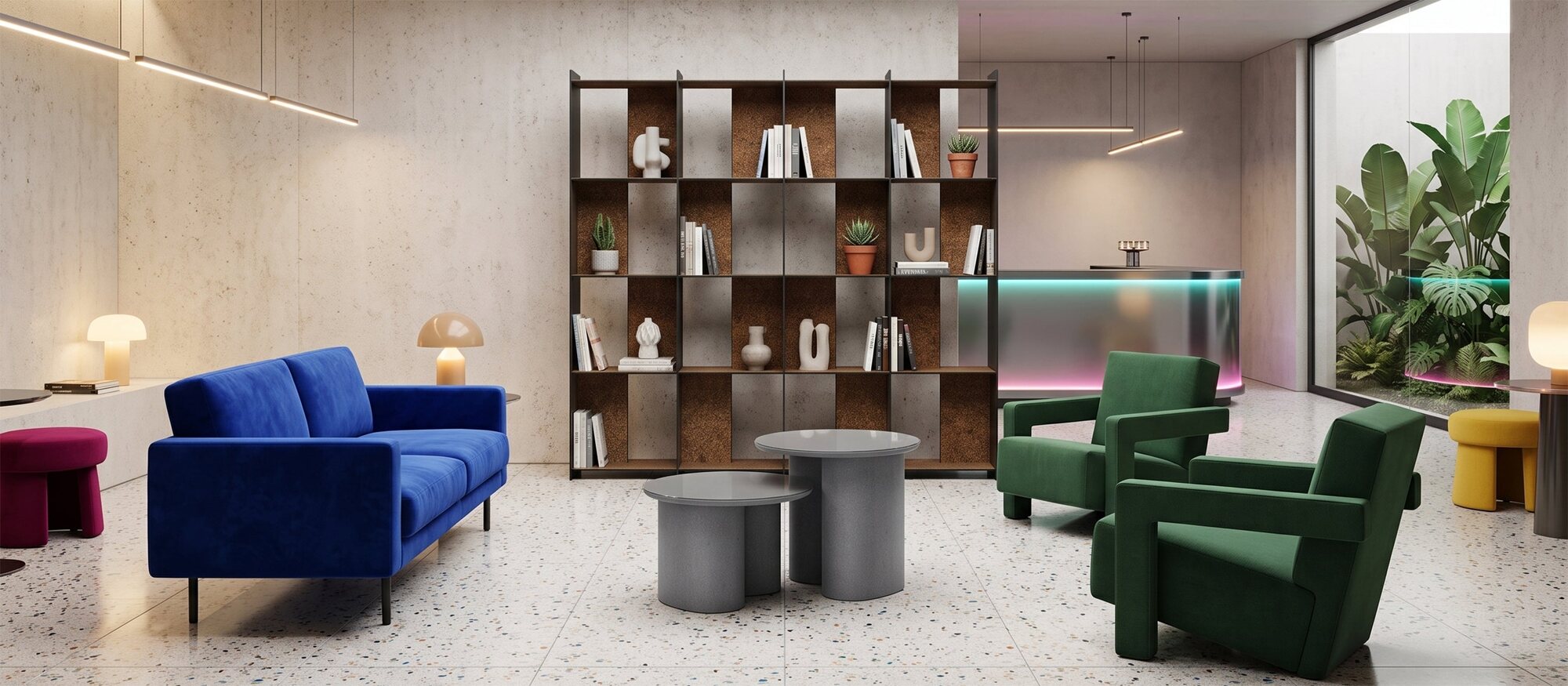
Where the material comes from
Made from what others leave behind.
Our fibres come from residues that would otherwise be thrown away or burned. On top of that there is solid oak from our region.
01Recycled paper fibres
From used cardboard whose fibres are too short for new cardboard.
02Grass fibres
Mown from the airfields of Amsterdam Airport.
03Residues from biogas plants
From the fermentation of agricultural residues, we obtain fibres for our panel materials.
04Tomato plants
From industrial greenhouses, where they would otherwise be burned after the harvest.
05Industrial hemp
Grown in Germany and the Netherlands.
06Textile fibres
Recycled cotton fibres from the filters of industrial laundries. They give our Jeans surfaces their blue.
07Solid oak
Solid oak from our region. We are at home in the Münsterland and in Ostwestfalen-Lippe, and our joinery workshop is in Lippstadt. We buy the logs just a few kilometres away, saw them ourselves and have the wood dried by a partner nearby. Short distances and careful use of every plank.
Oak from our region
From the log to the plank.
Alongside the fibre panels, we work with solid oak from our region. We are rooted in the Münsterland and in Ostwestfalen-Lippe, and our joinery workshop is in Lippstadt. We buy the logs just a few kilometres away, saw them ourselves and have the wood dried by a partner nearby. That way we know where every plank comes from, keep distances short and use the log as completely as possible.
See Balina in oak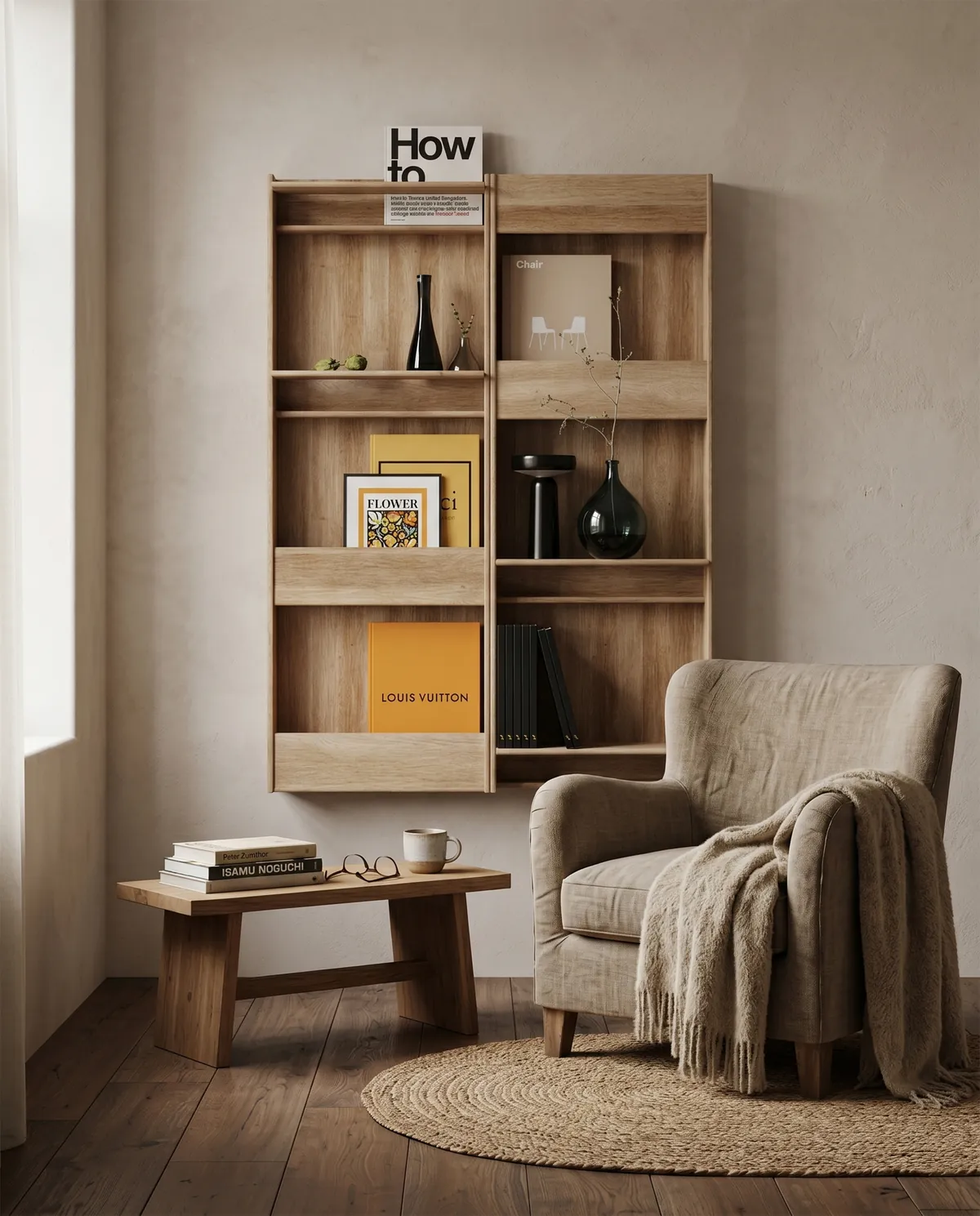
How we use it
Single-material by design, built to come apart.
Detachable connections and single-material panels make recycling possible wherever cellulose fibres can be recovered. The leftovers become new furniture panels or entirely different products, all the way to textiles. Solid oak can be refurbished, reused or, at the end, returned to nature.
Why plant-based
Six reasons that speak for themselves.
Fast growth
More biomass per square metre than wood, without overusing resources.
CO2 storage
Species such as industrial hemp store particularly large amounts of CO2.
Circular economy
Easy to return to material cycles.
Compostability
Industrially and naturally compostable.
Health
No harmful emissions like those from conventional furniture.
Future-proof
Short supply chains, independent of material price fluctuations.
The loop
Design that doesn't become waste.
Conventional furniture often ends up as bulky waste and is burned, because fittings and composite materials prevent recycling. We think the journey through to the end: we take back furniture we have sold and pass the material on to our panel manufacturer, who turns it into new fibre panels.
Through our take-back system, we collect sold products at the end of their use.
Detachable connections and single-material panels can be taken apart and sorted by material.
The material goes to our panel manufacturer and becomes the resource for new fibre panels.
Climate
Lower emissions already in use.
Official CO2 footprints are not yet available. What can already be shown today: in use alone, our plant-based panels cause significantly less environmental impact than conventional materials. The following benchmark results come from an independent life cycle assessment.
Dynamic LCA
Life cycle assessment
Climate impact disposal per shelf, using plant based panels
* Benchmark results from a bachelor's thesis by Mirko Maats at AMIBM Maastricht, supervised by Dr. Ali Ghannadzadeh, assistant professor at Maastricht University. The life cycle assessment is based on the example calculation and production of a sideboard by eudemia.
Who is behind eudemia
Chris and Jonas.
We want to show that furniture made from residues can be just as beautiful and high-quality as conventional furniture. And that this can be done in a craft workshop.
Get to know us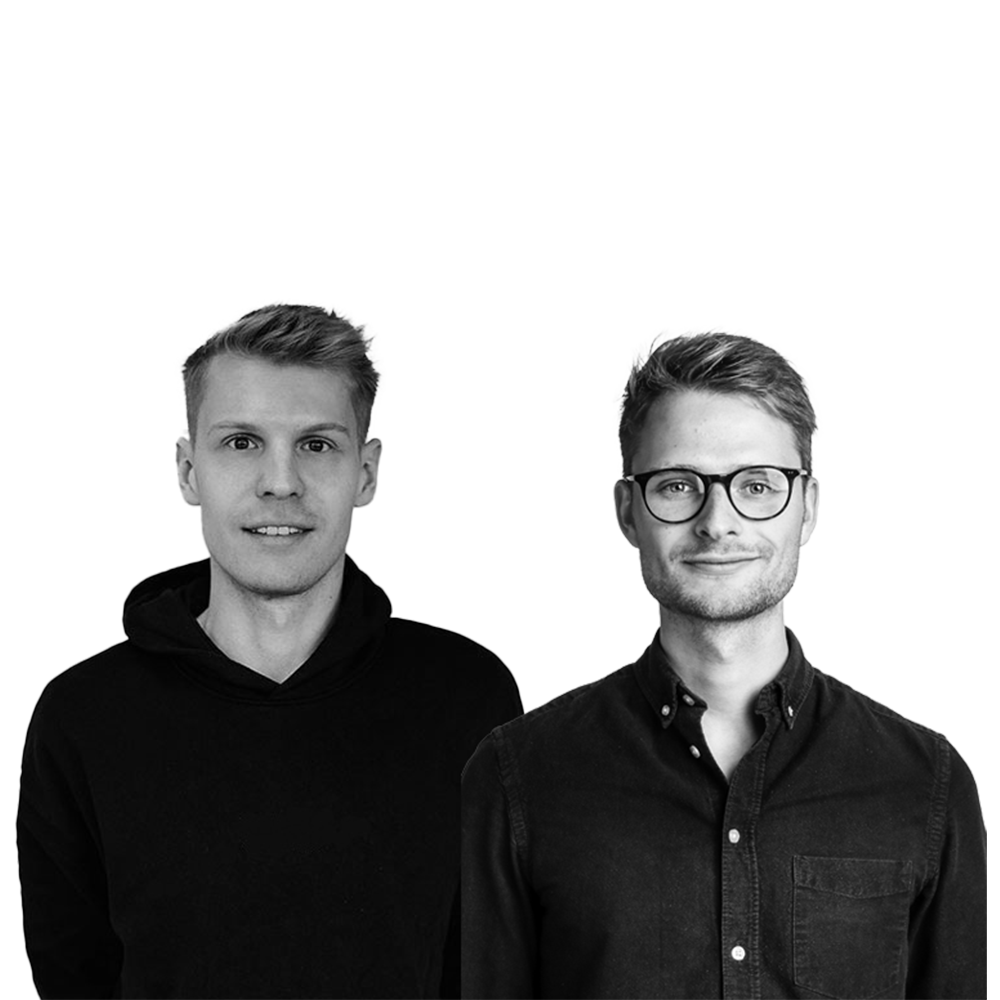
What we are working on
From raw material to finished furniture.
Our concept is being researched across borders in the INTERREG pilot project Realise-Bio. Together with our material manufacturer, we are bringing the materials into furniture making for the first time, connecting agriculture, craft, industry and research in the German-Dutch border region.